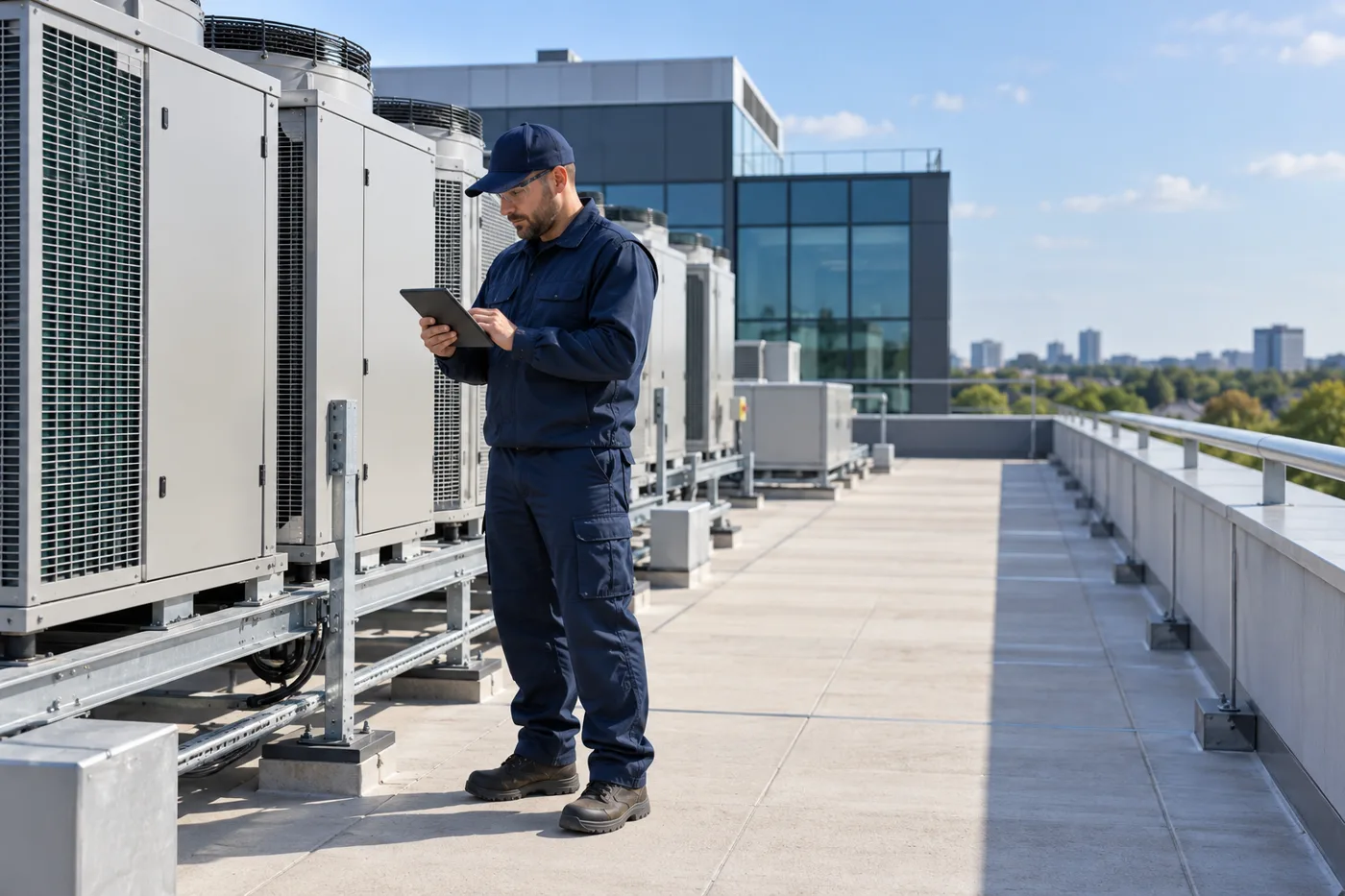
A malfunctioning HVAC system can quickly become a serious problem for a commercial property. Whether you manage an office building, restaurant, retail store, or warehouse, heating and cooling problems can affect employee comfort, customer experience, equipment performance, and daily operations.
Knowing when your system needs professional attention can help you avoid unnecessary downtime and potentially more expensive repairs.
In this guide, we'll cover the most common commercial HVAC problems, warning signs to watch for, what building managers can safely check, and when it's time to call a qualified HVAC contractor.
What Is Commercial HVAC Repair?
Commercial HVAC repair involves diagnosing and fixing problems with heating, ventilation, and air conditioning systems used in business and commercial properties.
Unlike typical residential equipment, commercial HVAC systems may serve multiple zones, operate for longer hours, and include more complex controls or equipment configurations.
Common commercial HVAC equipment includes:
- Rooftop HVAC units (RTUs)
- Commercial split systems
- Packaged heating and cooling systems
- Variable refrigerant flow (VRF) systems
- Chillers and cooling towers
- Air handling units (AHUs)
- Commercial heat pumps
Repairs can range from replacing a faulty sensor to correcting airflow problems, repairing electrical components, or addressing refrigerant leaks.
Because these systems often serve occupied buildings and critical business operations, timely diagnosis is especially important.
7 Common Commercial HVAC Problems
Commercial HVAC equipment can experience a wide range of mechanical, electrical, and operational problems.
Here are seven issues building owners and facility managers should recognize.
1. Insufficient Cooling or Heating
One of the most noticeable signs of HVAC trouble is a system that runs but fails to maintain the desired indoor temperature.
Common symptoms:
- Rooms remain too warm or too cold.
- The system runs continuously without reaching its setpoint.
- Certain areas of the building experience inconsistent temperatures.
- Cooling or heating performance gradually declines.
Possible causes:
- Restricted airflow
- Dirty evaporator or condenser coils
- Faulty thermostats or temperature sensors
- Refrigerant-related problems
- Malfunctioning compressors
- Incorrect control settings
A technician can evaluate airflow, operating conditions, controls, and equipment components to identify the underlying issue.
When to call a professional: If the system consistently fails to maintain normal temperatures, especially during business hours, arrange a professional inspection rather than repeatedly adjusting the thermostat.
2. Poor Airflow or Uneven Temperatures
Weak airflow can make a commercial space uncomfortable even when the heating or cooling equipment appears to be operating.
Common causes include clogged filters, blocked vents, blower problems, duct restrictions, or improperly balanced airflow.
In larger buildings, uneven temperatures may also result from malfunctioning zone dampers or building automation controls.
When to call a professional: If multiple rooms have persistent airflow problems or occupants report significant temperature differences, a commercial HVAC contractor can evaluate the distribution system and its controls.
3. Refrigerant Leaks
Refrigerant is essential to the cooling process in many commercial air conditioning systems.
A refrigerant leak can reduce cooling performance and place additional stress on equipment.
Potential warning signs include:
- Reduced cooling capacity
- Longer operating cycles
- Ice forming on refrigerant lines or coils
- Unusual hissing sounds
- Repeated low-refrigerant findings during service
These symptoms are not definitive proof of a leak. Professional testing is needed to establish the cause.
Important: Refrigerant work should not be treated as a do-it-yourself repair. The U.S. Environmental Protection Agency requires appropriate Section 608 technician certification for covered work involving refrigerant circuits.
When to call a professional: If a refrigerant leak is suspected, arrange an inspection by a technician with the appropriate certification.
4. Electrical and Control System Failures
Commercial HVAC equipment depends on electrical components and control systems to operate safely and efficiently.
Problems may involve:
- Failed contactors or relays
- Defective capacitors
- Faulty sensors
- Wiring damage
- Motor failures
- Control board malfunctions
- Building automation system communication errors
Warning signs include equipment that will not start, intermittent operation, repeated fault codes, or unexpected shutdowns.
When to call a professional: Electrical problems require qualified personnel. If equipment repeatedly trips a breaker, do not keep resetting it. If there is smoke, sparking, or a burning odor, stop using the affected equipment when safe and follow the building's emergency procedures.
5. Unusual Noises or Vibrations
Commercial HVAC systems generate normal operating sounds, but new or unusually loud noises may indicate developing mechanical problems.
Examples include:
| Sound | Possible issue |
|---|---|
| Grinding | Bearing or motor problems |
| Squealing | Belt or motor-related problems |
| Rattling | Loose panels or mechanical components |
| Banging | Loose or damaged moving components |
| Persistent buzzing | Electrical or mechanical faults |
These are possible explanations, not reliable diagnoses based on sound alone.
When to call a professional: If the equipment begins making loud, persistent, or unfamiliar noises, have it inspected before continued operation causes additional damage.
6. Water Leaks and Drainage Problems
Commercial cooling systems produce condensation that must drain properly.
Blocked condensate drains, damaged drain pans, or improperly operating pumps can cause water to accumulate around equipment.
Potential consequences include:
- Ceiling or wall damage
- Wet insulation
- Slippery surfaces
- Moisture-related indoor air quality concerns
- Damage to nearby electrical equipment
When to call a professional: Visible water leakage, recurring drain backups, or water near electrical components should be addressed promptly. Significant leaks may require authorized personnel to shut down affected equipment and isolate the area; do not approach wet electrical equipment.
7. Frequent Cycling or Unexpected Shutdowns
An HVAC system that repeatedly starts and stops may be experiencing a control, airflow, electrical, or equipment-capacity issue.
Possible causes include malfunctioning sensors, safety switches, overheating components, or incorrect system settings.
Frequent cycling can increase component wear and make it harder to maintain comfortable indoor conditions.
When to call a professional: If the system repeatedly shuts down, generates fault codes, or cycles abnormally, schedule a diagnostic inspection.
Need help scoping an HVAC repair?
Organize your symptoms, equipment details, and property location in a brief you can share with your chosen contractor.
Prepare a project brief. Provider availability is not confirmed, and nothing is sent to contractors.
When Should You Call a Commercial HVAC Repair Professional?
Not every temperature complaint indicates an emergency, but certain warning signs should receive immediate attention.
Situations That Require Urgent Attention
Contact a qualified professional promptly when:
- The building loses cooling or heating during extreme temperatures.
- HVAC equipment produces smoke or a burning smell.
- There are signs of electrical arcing or repeated breaker trips.
- Significant water leakage threatens occupied areas or electrical equipment.
- A critical commercial space loses required environmental control.
- Equipment develops severe mechanical noises or vibrations.
If there is an immediate fire, electrical, or other life-safety hazard, follow emergency procedures and contact emergency services as appropriate.
Situations That Usually Warrant a Scheduled Inspection
Arrange professional service when:
- Energy consumption increases without an obvious explanation.
- Certain zones are consistently uncomfortable.
- Airflow is weaker than normal.
- The system operates longer than expected.
- Maintenance inspections identify deteriorating components.
- Equipment repeatedly displays noncritical fault codes.
Addressing these issues early may help prevent more disruptive failures.
Commercial HVAC Troubleshooting: What Can Building Managers Check?
Before requesting service, facility managers can perform a few basic observations without opening equipment or attempting technical repairs.
Step 1: Check Thermostat Settings
Confirm that the temperature settings, operating schedule, and selected mode are appropriate.
For buildings with centralized controls, check whether an authorized schedule change or override explains the problem.
Step 2: Check for Obstructed Vents
Look for furniture, storage materials, or other objects blocking accessible supply or return air openings.
Avoid moving equipment or accessing restricted mechanical areas without authorization.
Step 3: Review System Alerts
If your building has a building management system, record any visible alarms or fault messages.
This information can help the contractor begin diagnosis.
Step 4: Document the Problem
Write down:
- When the issue started
- Which rooms or zones are affected
- Whether the problem is continuous or intermittent
- Any unusual noises or odors
- Recent maintenance or repair activity
Step 5: Contact a Qualified Technician
If basic observations do not explain the problem, arrange a professional inspection.
Avoid opening electrical panels, handling refrigerant, bypassing safety devices, or performing internal equipment repairs.
The Occupational Safety and Health Administration establishes hazardous-energy control requirements for applicable servicing and maintenance activities. These procedures help protect workers from unexpected equipment startup or energy release.
How Much Does Commercial HVAC Repair Cost?
Commercial HVAC repair costs vary considerably depending on the equipment, failure, building conditions, and work required.
A minor sensor replacement is fundamentally different from repairing a compressor, motor, or major refrigeration component.
Several factors influence the final price.
Type of Repair
Repairs involving major mechanical or electrical components typically require different labor, parts, and diagnostic procedures than routine adjustments.
Equipment Size and Complexity
Large rooftop units, multi-zone systems, chillers, and sophisticated control systems may require specialized expertise and components.
Accessibility
Equipment installed on rooftops or in restricted mechanical spaces may require additional access arrangements or safety measures.
Urgency
Emergency, after-hours, and weekend service may involve different labor charges than scheduled repairs.
Parts Availability
Replacement components may be readily available or require special ordering, depending on the equipment manufacturer, model, and age.
Before approving a repair, request an itemized estimate that explains the diagnosis, proposed work, parts, labor, and any applicable warranty terms.
For broader planning, explore our commercial service cost factors and request an itemized HVAC estimate from your chosen contractor.
Get the details ready for a repair estimate.
Prepare your equipment, access, and timing information before discussing an itemized estimate with a contractor.
Prepare a project brief. Provider availability is not confirmed, and nothing is sent to contractors.
Commercial HVAC Repair vs. Replacement: Which Makes More Sense?
When a commercial HVAC system develops a serious problem, repairing it may not always be the most economical long-term solution.
Consider the following factors:
| Factor | Repair may make sense when | Replacement may be worth evaluating when |
|---|---|---|
| Equipment condition | Overall condition is good | Multiple major components are deteriorating |
| Repair history | Failures are infrequent | Breakdowns are becoming frequent |
| Parts availability | Parts are readily available | Critical components are obsolete or difficult to source |
| Energy performance | Operating performance remains acceptable | The system is inefficient or poorly matched to building needs |
| Project cost | Repair provides reasonable remaining service life | Major repair expense approaches the value of replacement |
There is no universal age or repair-cost threshold that makes replacement the correct choice for every commercial HVAC system.
A qualified contractor can compare repair costs, expected remaining service life, operating efficiency, and replacement options.
How to Choose the Right Commercial HVAC Repair Contractor
Not every HVAC contractor has the same experience with commercial equipment.
Before hiring, evaluate the following.
Commercial Equipment Experience
Ask whether the contractor regularly works with your type of system, such as rooftop units, chillers, commercial split systems, or VRF equipment.
Licensing and Insurance
Verify applicable state and local licensing requirements and request appropriate insurance documentation.
Refrigerant Certification
For covered refrigerant work, confirm that the technicians hold the appropriate EPA Section 608 certification.
Diagnostic Process
A reliable contractor should be able to explain the identified problem, recommended repair, and any relevant alternatives.
Written Estimates
Request written documentation of the proposed work and clarify which charges are included.
Service Availability
If your building operates outside standard business hours, ask whether the contractor offers emergency or after-hours service.
Availability and response times should be confirmed directly rather than assumed.
How Preventive Maintenance Helps Reduce HVAC Problems
Regular inspections and maintenance can help identify deteriorating components before they cause significant operational problems.
The Air Conditioning Contractors of America has developed commercial HVAC inspection and maintenance guidance, hosted by DOE Better Buildings, that building owners can use when evaluating maintenance practices.
A maintenance program may include:
- Inspecting and replacing filters as appropriate
- Checking coils and airflow
- Inspecting belts, bearings, and motors
- Testing controls and safety devices
- Checking condensate drainage
- Evaluating electrical components
- Reviewing equipment performance
- Documenting identified deficiencies
The appropriate maintenance schedule depends on equipment type, operating conditions, manufacturer recommendations, and the building's requirements.
Preventive maintenance cannot eliminate every breakdown, but it can support more reliable operation and better-informed repair decisions.
Frequently Asked Questions About Commercial HVAC Repair
What are the most common commercial HVAC problems?
Common problems include restricted airflow, faulty controls, electrical failures, refrigerant leaks, drainage issues, and worn mechanical components. The specific causes depend on the equipment and operating conditions.
How do I know if my commercial HVAC system needs repair?
Warning signs include inconsistent temperatures, weak airflow, unusual noises, unexpected shutdowns, water leaks, and declining heating or cooling performance.
Can I troubleshoot commercial HVAC problems myself?
Building managers can check accessible thermostat settings, review visible alerts, and look for blocked vents. Electrical, mechanical, and refrigerant repairs should be handled by appropriately qualified personnel.
How long does commercial HVAC repair take?
Repair time depends on the problem, system complexity, accessibility, and parts availability. A contractor may be able to resolve some issues during the initial visit, while major repairs may require additional work.
Is it better to repair or replace commercial HVAC equipment?
The decision depends on equipment condition, repair history, remaining useful life, energy performance, and total project cost. A professional evaluation can help determine the more economical option.
How often should commercial HVAC systems be serviced?
Maintenance frequency depends on the system, manufacturer recommendations, operating environment, and usage. Some components need more frequent attention than others. A qualified contractor can recommend a suitable schedule.
Do commercial HVAC technicians need special certifications?
Technicians performing covered refrigerant work must hold the appropriate EPA Section 608 certification. Other licensing, qualification, and safety requirements may also apply.
Find Commercial HVAC Repair Through Commercial Buddy
Start with a clear plan for your property. Add your city, ZIP code, HVAC symptoms, and project details to create a brief you can copy and share with a provider of your choice.
Prepare a project brief. Provider availability is not confirmed, and nothing is sent to contractors.
Research sources
These sources support the certification, hazardous-energy safety, and maintenance guidance in this article. This guide is general information; equipment-specific diagnosis and repair require a qualified professional.